

Meta AI Training Terms Paused: What Advertisers Need to Know

Meta was fifteen days away from rolling out a set of new business and ad terms that had alarmed publishers, advertisers, and regulators for weeks. On November 5, 2026, it paused them indefinitely. If your business runs ads on Facebook or Instagram, or uses any of Meta’s AI-assisted ad creative tools, here is what actually happened โ€” and what, despite the pause, has not changed.

Meta AI Training Terms Paused: What Advertisers Need to Know

What Meta Announced

Meta updated its Business Help Center with a notice stating that proposed updates to four sets of terms โ€” the Commercial Terms, Product Catalog Terms, Self-Serve Ad Terms, and Ad Creative Generative AI Terms โ€” “are now paused and will not take effect on November 20, 2026.” The notice adds that “our existing terms remain in effect.” A Meta spokesperson told Nieman Lab: “We’re pausing the changes as we continue to engage with stakeholders and take our time to get this right.” No new effective date has been set.

This matters because of what the proposed terms would have done. The revised Commercial Terms included a new crawling provision, reported to cover websites tied to a business’s Meta advertising and business tools. Separately, an “AI Features” section โ€” first reported by Adweek โ€” would have made advertisers “solely responsible” for the results of Meta’s AI features and any changes those features made to ad creative, including features Meta can turn on automatically.

How We Got Here: A Six-Week Dispute

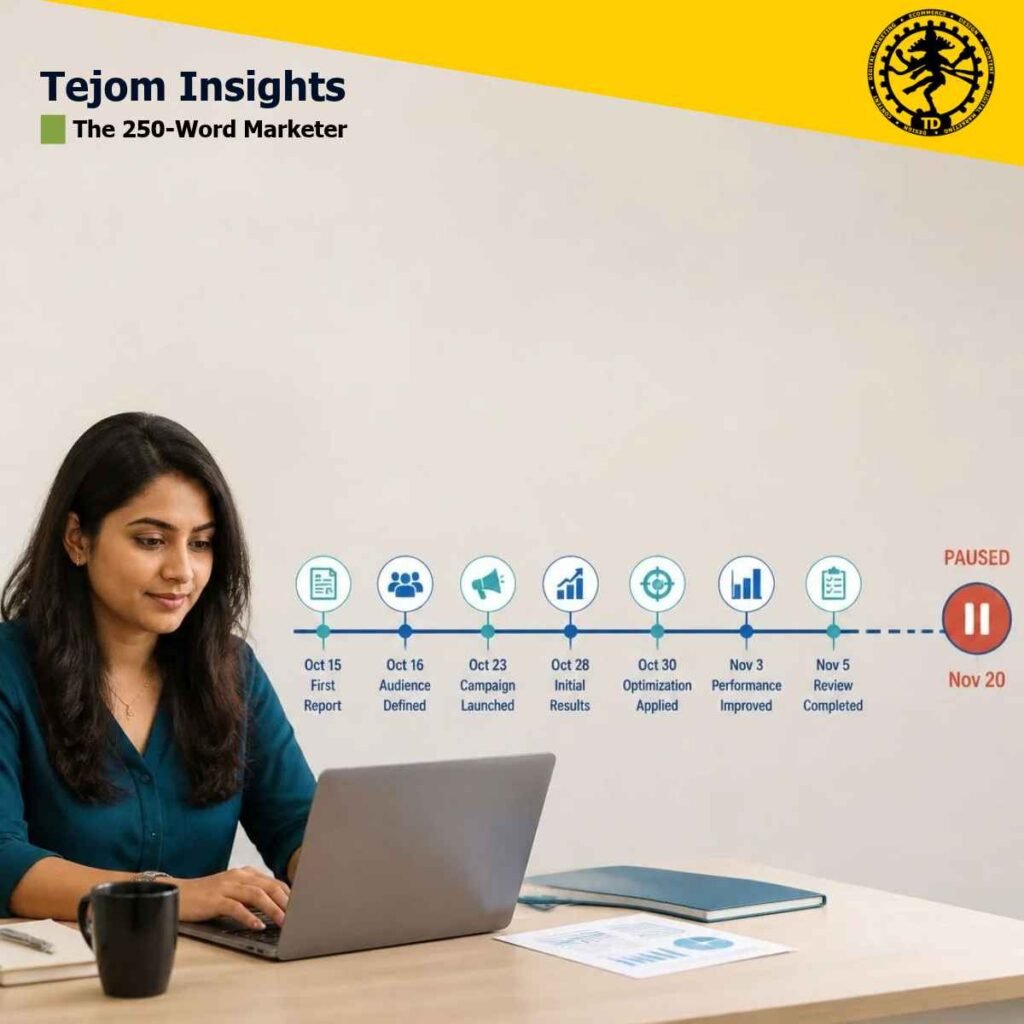
  • October 15: Nieman Lab first reports the proposed terms.
  • October 16: Meta removes the word “train” from the terms, limiting future use of scraped content to “advertising and business products.” Legal observers still consider the remaining wording broad.
  • October 23: Meta pushes the effective date from October 30 to November 20.
  • October 28: Andy Stone, Meta’s VP of Communications, pledges a full consultation with industry groups that could extend past November 20. The same day, an Oslo court temporarily blocks the terms following a complaint from Norwegian media organizations.
  • October 30: The UK’s Competition and Markets Authority (CMA) opens a formal investigation.
  • November 3: A Sรฃo Paulo court suspends the crawling clause for members of Brazil’s national media associations.
  • November 5: Meta announces the indefinite pause.

Throughout this period, US Senators Adam Schiff and Marsha Blackburn publicly asked Meta to withdraw the terms. Meta has not linked its decision to any single one of these pressures.

What Actually Remains in Effect

This is the part most headlines skip, and it is the part advertisers need to get right. Pausing the *proposed updates* does not mean Meta has no AI-related terms today. According to Search Engine Journal’s review, the terms currently in force include:

  • Self-Serve Ad Terms (dated August 22, 2025): placing an ad order already gives Meta the right to access, index, cache, analyze, or crawl content on the advertiser’s domains, including for research and training.
  • Ad Creative Generative AI Terms (dated May 6, 2024): Meta may crawl URLs an advertiser provides for use with their ads.

In other words, the pause stops a *new, broader* set of terms from starting โ€” it does not switch off Meta’s existing crawling permissions under older terms businesses already agreed to when they started advertising.

What Advertisers Should Actually Check

Three practical steps, regardless of where the legal dispute ends up:

    1. Don’t accept any new terms yet.
      No new business or ad terms require acceptance before November 20, 2026, since the update was paused. If anything in Ads Manager prompts you to accept new terms, read it carefully before clicking through.
    2. Review your robots.txt against Meta’s documented crawlers.
      Meta’s public crawler documentation lists Meta-ExternalAds (for ads and business products) and Meta-ExternalAgent (for uses such as training foundation AI models), with robots.txt rules for both. Meta says it has made no change to its crawling methods during this pause, so this is worth checking now rather than waiting for a resolution.
    3. Know you can opt out of individual AI features.
      Per a Meta spokesperson, advertisers can turn off individual Advantage+ AI features at any time inside Ads Manager โ€” this does not depend on how the terms dispute resolves.

What This Means for Businesses in India

  1. None of the available reporting โ€” Nieman Lab, Search Engine Journal, or PPC Land โ€” names India among the jurisdictions pushing back (only Norway, Brazil, and the UK are specifically named). That is worth stating plainly rather than assuming India-specific impact that has not been confirmed. What is certain is that Indian businesses advertising on Facebook and Instagram already operate under Meta’s existing Self-Serve Ad Terms and Ad Creative Generative AI Terms โ€” the same terms every advertiser globally agrees to โ€” so the practical checklist above applies regardless of geography.

    For agencies managing Meta ad budgets across Kolkata, Bengaluru, Delhi NCR, and Chandigarh, this is a good moment to brief clients honestly: the most controversial proposed changes are paused, not canceled, and the UK CMA’s investigation is expected to run through at least its first fact-gathering phase in January 2027.

Key Takeaways

  • Meta paused proposed updates to four sets of terms on November 5, 2026, fifteen days before their planned November 20 start date.
  • The pause followed court injunctions in Norway and Brazil and a formal UK CMA investigation โ€” Meta has not linked the pause to any one cause.
  • Existing Self-Serve Ad Terms (2025) and Ad Creative Generative AI Terms (2024) remain unchanged and already grant Meta certain crawling rights.
  • No new effective date has been announced; advertisers do not need to accept any new terms right now.
  • Advertisers can opt out of individual Advantage+ AI features at any time in Ads Manager, independent of this dispute.

How is your team handling Metaโ€™s Advantage+ AI tools right now?

Are you leaving automated creative features on, or auditing your robots.txt files while these terms are on hold? Drop your thoughts in the comments belowโ€”or share this post with your media buyer so your team is briefed before Q1.

A 15-minute session?

Take the first step toward future-proof growth:

  • For a Direct Business Query: Call us at ย 99034 72194

  • For a Quick Consultation: WhatsApp our team at 79807 31010

FAQs

  1. What exactly did Meta pause on November 5, 2026?
    Meta paused proposed updates to four sets of terms: the Commercial Terms, Product Catalog Terms, Self-Serve Ad Terms, and Ad Creative Generative AI Terms. These updates were scheduled to take effect November 20, 2026, and will not now.
  2. Why did Meta pause these terms?
    Meta said only that it is “pausing the changes as we continue to engage with stakeholders and take our time to get this right.” Reported context includes court injunctions in Norway and Brazil, a formal UK CMA investigation opened October 30, 2026, and public pressure from US senators and publisher groups.
  3. Do I need to accept new Meta ad terms right now?
    No. Since the update is paused, no new terms require acceptance before November 20, 2026, and no new effective date has been set.
  4. Does this mean Meta can no longer crawl my website?
    No. Meta’s existing Self-Serve Ad Terms (from August 2025) and Ad Creative Generative AI Terms (from May 2024) remain in effect and already include crawling permissions tied to advertising activity. Only the newer, broader proposed terms were paused.
  5. Is this confirmed by Meta, or only by press reports?
    It is confirmed directly by Meta, through a Business Help Center notice and a company spokesperson’s statement. Nieman Lab first reported it on November 5, 2026; Search Engine Journal and PPC Land corroborated it with further detail.
  6. Does the pause apply to businesses in India?
    No source reviewed for this article names India specifically. The reported legal and regulatory pressure came from Norway, Brazil, and the UK. Indian advertisers are still subject to Meta’s existing terms.
  7. What was the “AI Features” section that caused concern?
    A section, first reported by Adweek, that would have made advertisers “solely responsible” for the results of Meta’s AI features and any changes those features made to their ad creative โ€” including features Meta can turn on automatically.
  8. Can I still opt out of AI features in my Meta ads account?
    Yes. A Meta spokesperson confirmed advertisers can opt out of individual Advantage+ AI features at any time in Ads Manager, independent of this paused-terms dispute.
  9. What is the UK CMA investigation about, and when does it end?
    The UK Competition and Markets Authority opened a formal investigation on October 30, 2026, into Meta’s proposed terms. Its first fact-gathering phase is scheduled through January 2027, though the timeline may change.
  10. Did Meta remove the word “train” from the terms?
    Yes, on October 16, 2026, limiting future use of scraped content under the proposed terms to “advertising and business products.” Legal observers quoted in coverage still considered the remaining wording broad enough to raise concerns.
  11. Should I change my robots.txt file because of this?
    Meta says it has made no change to its crawling methods during the pause. It is still good practice to check your robots.txt against Meta’s published crawler documentation (Meta-ExternalAds and Meta-ExternalAgent) so you know exactly what you are, and are not, already permitting.
  12. When will Meta announce new terms?
    Meta has not given a timeline. Its spokesperson said only that it will continue to engage with stakeholders. This article will be updated in future coverage if and when Meta announces revised terms or a new effective date.

#MetaAds #DigitalMarketing #AdTech #MarketingCompliance #PerformanceMarketing #SocialMediaAds #TejomDigital

ChatGPT Business Hub: What OpenAI's New Tool Means for Brands
The 250-Word Marketer
Arnab Kamal Bhattacharya

ChatGPT Business Hub: What OpenAI’s New Tool Means for Brands

OpenAI has launched the ChatGPT Business Hub, letting companies claim a profile, track mentions and clicks, and โ€” for eligible US businesses โ€” build their own branded chat agent inside ChatGPT. Here’s what it actually includes, what’s still US-only, and what it signals for AI-search visibility strategy.

Read More ยป