Performance Max Brand Query Filtering: What Changed and What to Check in Your Account

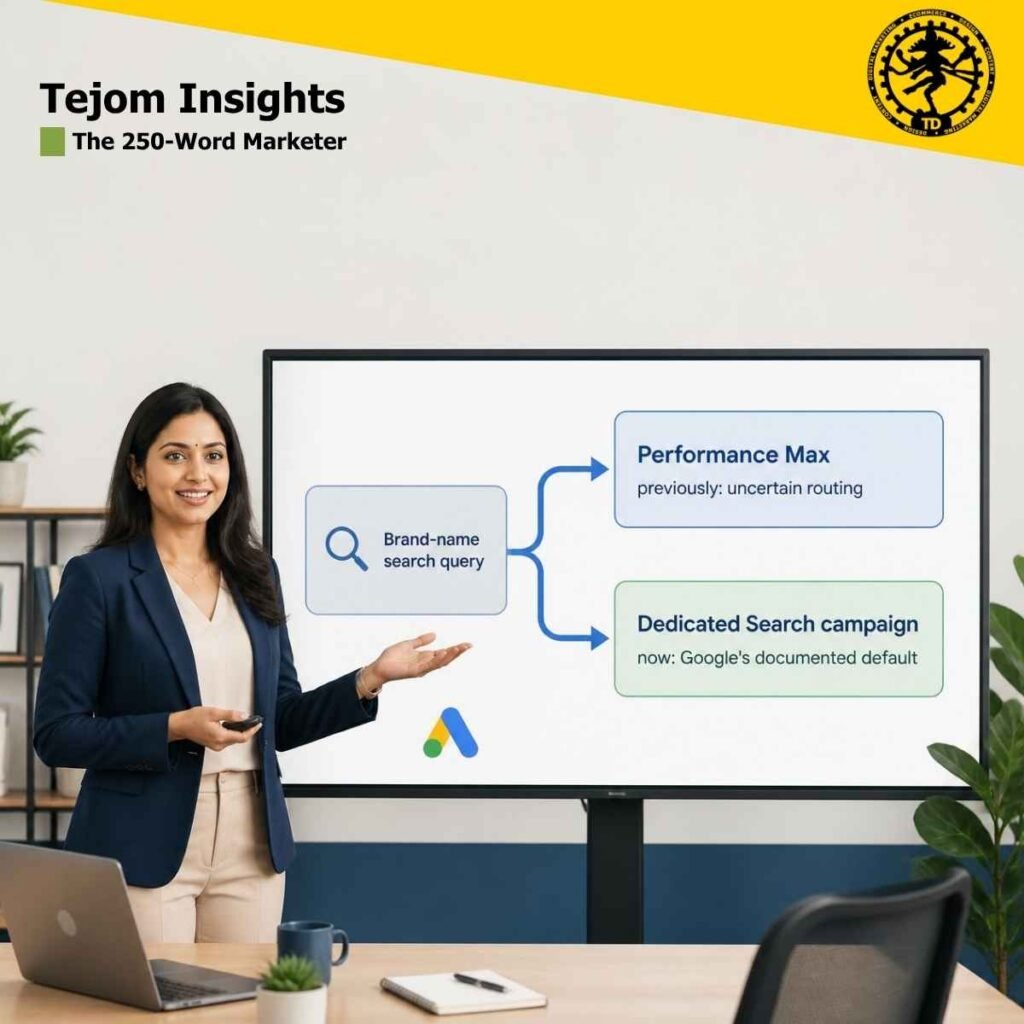
Google has just confirmed, in its own help documentation, something advertisers have argued about for years: Performance Max can now filter out brand and navigational searches and hand them to Search campaigns instead of keeping them for itself.
This is not a leak or a rumor. Barry Schwartz at Search Engine Roundtable reported on November 3, 2026, that Google updated its help page, “How Performance Max interacts with other campaigns in your account,” to add a new paragraph stating that Performance Max “may filter out navigational or brand-specific search queries” so that “campaigns with more precise control” — meaning dedicated Search campaigns — can handle them. The change was first spotted by Hana Kobzová of PPC News Feed, and Schwartz confirmed it by comparing the live page against an archived version that did not contain this language.
If you manage Google Ads for a brand with any meaningful brand-search volume, this is worth five minutes of your attention this week — especially with Diwali on November 8 and Black Friday/Cyber Monday promotions due into Merchant Center within weeks.

Performance Max Brand Query Filtering: What Changed and What to Check in Your Account

Why This Change Matters

Performance Max has faced a persistent, well-documented criticism since its launch: because its AI bids across Search, Display, YouTube, Discover, Gmail, and Maps simultaneously, it can end up capturing brand and navigational searches — people searching for your business by name, who were always going to click and convert — and claiming credit for conversions that a dedicated (and usually much cheaper) brand Search campaign would have captured anyway. This inflates PMax’s apparent efficiency while starving brand Search campaigns of the volume they need to look healthy in reporting.


Google has previously given advertisers partial tools to manage this, such as brand exclusion lists and, more recently, the ability to add “Search Themes” to guide which queries Performance Max leans into. But Google had never previously stated, in its own documentation, that Performance Max might proactively filter brand and navigational queries out on its own. This update is the first time that behavior has been acknowledged directly by Google, rather than inferred by advertisers from their own account data.

What the Updated Help Document Actually Says

Based on Search Engine Roundtable’s reporting of the new help-page language:

  • Performance Max “may filter out navigational or brand-specific search queries.”
  • The stated reason is to keep brand queries inside campaigns — Search campaigns — “with more precise control.”
  • Advertisers who still want Performance Max to reach navigational queries can add Search Themes to the campaign to signal that intent.

What the update does not say is just as important: Google has not published what share of brand or navigational traffic this affects, which accounts are already seeing it, when the behavior was switched on, or whether it applies uniformly across industries and account sizes. Schwartz’s article cites no performance data or measured before/after impact — only the documentation change itself.

What to Check in Your Account This Week

  1. Compare your brand Search campaign’s recent volume and budget utilization against the last 60-90 days. If brand-term impressions or clicks have shifted recently, this change — or an earlier, undocumented version of the same behavior — may be part of the reason.
  2. Make sure your dedicated brand Search campaign has adequate budget and eligible, well-built ads. Google’s own guidance now explicitly says this is the campaign that should be capturing brand traffic.
  3. Decide whether you want Performance Max to still reach navigational queries at all. If yes, add Search Themes to signal that intent, per Google’s documentation. If no, this change may already be doing the filtering work for you.
  4. Review your conversion reporting by campaign, not just in total. If credit for brand conversions is shifting from Performance Max to Search, your blended cost-per-conversion figures by campaign will move even if total conversions stay flat — a reporting change that is easy to misread as a performance change.
  5. Flag this to anyone building dashboards or client reports off campaign-level data. A shift in which campaign gets credit for the same underlying conversions can look like a performance swing to someone who isn’t aware of the underlying cause.

What's Still Unconfirmed

In the spirit of giving a complete, honest picture: Google has not stated when this filtering behavior actually began, whether it is rolling out gradually or is already live everywhere, or what percentage of brand/navigational query volume it affects. No independent, India-specific data exists yet on how this is playing out in Indian accounts. Treat any specific percentage or before/after number you see elsewhere online with caution until Google documents this more fully — this article does not invent one.

Key Takeaways

• Google has confirmed, in its own help documentation, that Performance Max may filter out brand and navigational search queries and route them to Search campaigns instead.
• This directly addresses — at least partially — the long-standing “PMax brand cannibalization” complaint from advertisers.
• Advertisers who want Performance Max to keep reaching navigational queries should add Search Themes to signal that intent.
• Review your dedicated brand Search campaign’s budget and ad eligibility now, since Google’s own guidance says this is the campaign meant to capture brand traffic going forward.
• Expect campaign-level reporting shifts that can look like performance changes but are really attribution changes — check before you react.
• No rollout timeline, affected-account list, or India-specific data has been published by Google as of this writing.

Make Sure Your Google Ads Budget Is Spent Where It Counts

With Google’s latest Performance Max update rolling out, your campaign-level reporting may already be changing. Get in touch with our team for a free Google Ads account review to verify your brand traffic and conversion tracking are fully aligned.

A 15-minute session?

Take the first step toward future-proof growth:

  • For a Direct Business Query: Call us at  99034 72194

  • For a Quick Consultation: WhatsApp our team at 79807 31010

FAQs

1. What is Performance Max brand query filtering?
A newly documented Google Ads behavior where Performance Max may filter out brand-specific or navigational search queries and route them to dedicated Search campaigns instead of handling them itself.

2. When did Google confirm this change?
Google updated its help documentation with this language on or shortly before November 3, 2026, when it was first reported by Search Engine Roundtable.

3. Does this mean Performance Max will stop showing ads for brand searches?
Not necessarily for your account specifically — Google’s language says PMax “may” filter these queries, and the behavior can vary. It also offers a way to keep navigational reach via Search Themes if you want it.

4. How is this different from brand exclusion lists?
Brand exclusion lists are a tool advertisers actively apply to stop Performance Max from bidding on specific brand terms. This new documentation describes default, Google-driven filtering behavior, not a setting you have to turn on yourself.

5. What are Search Themes and how do they relate to this?
Search Themes are a Performance Max setting that signals which search queries or topics you want the campaign to lean into. Google’s updated documentation says adding Search Themes is the way to keep navigational query reach in Performance Max if this new filtering would otherwise route them away.

6. Will this affect my reported Performance Max performance?
It can shift which campaign gets credit for brand-related conversions, which may change your campaign-level cost-per-conversion and ROAS figures even if your total conversions stay the same.

7. Should I increase my brand Search campaign budget now?
Review your recent brand Search campaign’s budget utilization and eligibility first. Google’s documentation suggests this is the campaign meant to capture brand traffic now, so make sure it has what it needs before assuming it automatically will.

8. Is this change live for all advertisers already?
Google has not published a rollout timeline or a list of affected accounts, so this is unconfirmed. Check your own account’s recent brand-query performance rather than assuming either way.

9. Does Google say why it made this change?
Google’s stated reason, per the updated help page, is to keep brand queries in campaigns with more precise control. It does not elaborate further, and no independent explanation has been published.

10. Is there India-specific data on how this is affecting Indian advertisers?
No. No India-specific rollout detail, percentage, or case study has been published by Google or any independent source as of this writing.

11. What should I do if I can’t tell whether this is affecting my account?
Compare brand Search and Performance Max campaign-level query reports over the last 60-90 days for any shift in brand-term volume, and consider a professional account audit if you manage substantial Google Ads spend and can’t isolate the cause yourself.

12. Does this replace the need for a dedicated brand Search campaign?
No — if anything, it reinforces the opposite. Google’s own guidance now explicitly frames the dedicated Search campaign as the right place to capture brand and navigational traffic with precise control.

#GoogleAds #PerformanceMax #PPC #DigitalMarketingIndia #BrandProtection #PaidSearch #MarTech #SEMIndia #GoogleAdsUpdate #TejomDigital

Is AI Search Visibility Worth It? What 3 New Studies Found
The 250-Word Marketer
Naina Adhikari

Is AI Search Visibility Worth It? What 3 New Studies Found

Three independent 2026 studies measured real website traffic and conversions from ChatGPT, Gemini, and other AI assistants against Google organic search — and found AI assistants send a small fraction of the traffic, though the visitors they do send often convert differently. Here’s what the data actually shows, what it doesn’t prove, and how to use it to plan your 2027 marketing budget.

Read More »
Chhath Puja 2026 Marketing Strategy: Beyond the Diwali Afterthought
The 250-Word Marketer
Naina Adhikari

Chhath Puja 2026 Marketing Strategy: Beyond the Diwali Afterthought

Diwali 2026 just wrapped. For brands with any reach into Bihar, Jharkhand, or eastern UP communities, Chhath Puja — falling November 13-16 — is a second, genuinely separate festive moment. Here’s a chhath puja 2026 marketing strategy built on what brands actually did last year, not assumptions.

Read More »