Tejom Digital Awarded top 10 Advertising Startup for 2022 by Silicon India - Start Up City
Tejom-Digital-Digital-Marketing-Agency- is an registered MSME

आ नो भद्राः क्रतवो यन्तु विश्वतः

Let noble thoughts come from all directions

70 / 100 SEO Score

The 2026 Transparency Framework for Influencer Marketing

In the early days of social media marketing, “reach” was the king of metrics. Brands were happy to see millions of impressions, assuming that eyeballs eventually equaled income. But in 2026, the market has matured. Clients are tired of paying for vanity metrics—those shiny numbers like likes and views that often fail to move the bottom line.


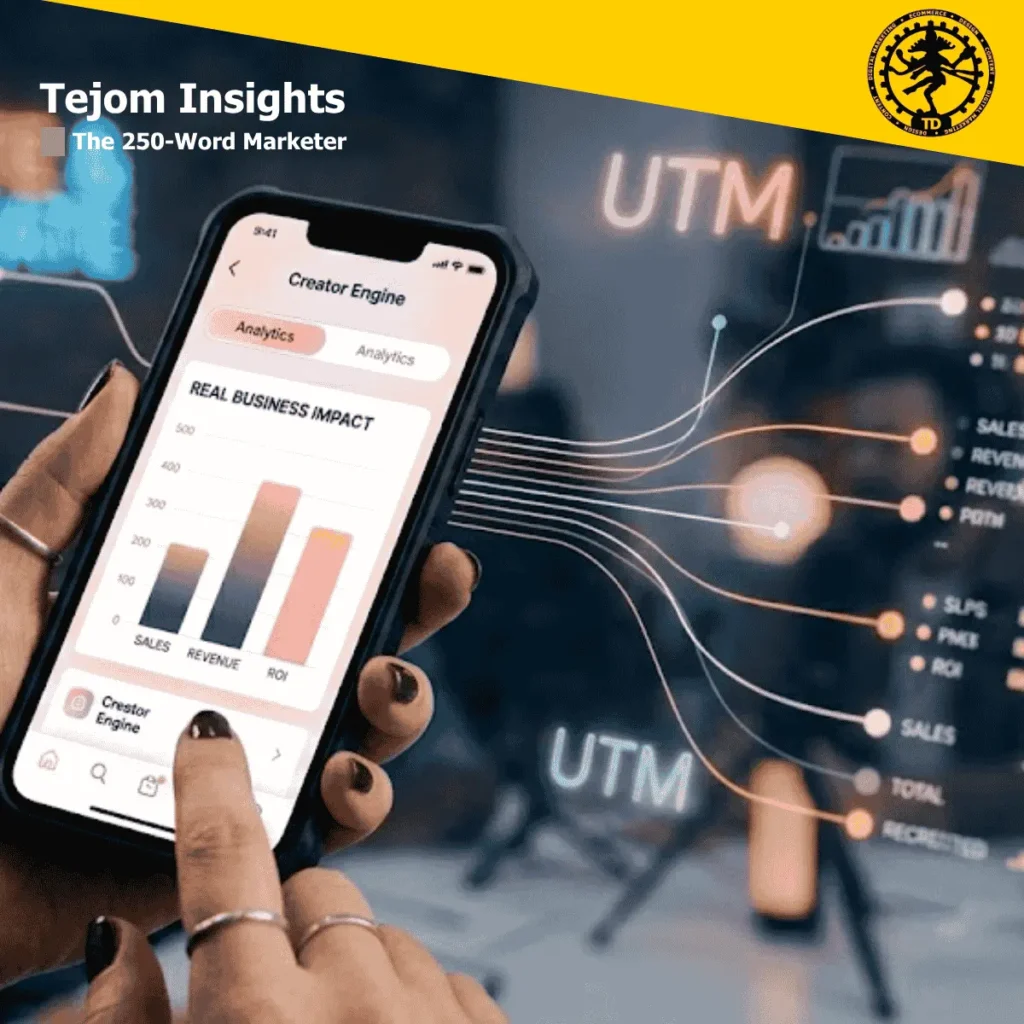
To grow a brand today, you need a Transparency Framework that bridges the gap between a creator’s post and a customer’s purchase. We show you exactly what’s working—and what’s not—by turning “influence” into hard data.

Transparency Framework for Influencer Marketing

The Problem: The Vanity Metric Trap

Most influencer campaigns fail not because the content is bad, but because the attribution is broken. When you lack a clear map of the customer journey, you end up over-investing in “viral” creators who drive zero conversions, while ignoring the “micro” creators who are actually fueling your revenue.

The Solution: Strategic Attribution & Mapping

The shift from guessing to growing requires two specific technical pillars: UTM Tracking and Engagement Mapping. By implementing these, you move from “we think this worked” to “we know this converted.”

Step-by-Step Implementation Guide

Standardize UTM Hierarchy


Goal: 

Make every creator link instantly attributable.

Your UTM protocol works perfectly:

?Utm_source=instagram&utm_medium=influencer&utm_campaign=spring_collection_2026&utm_content=travel_tom
 

Implementation:

  • Create a “Creator Link Builder” (Google Sheet/Notion page) that auto-generates properly tagged links

  • Have the creators add the codes compulsorily

  • Add utm_term for A/B testing (e.g., promo_20percent vs promo_freegift)

Pro tip: 

Set up GA4 custom dimensions to slice data by utm_content (creator handle) automatically.

Engagement Mapping


Goal: 

Connect social actions to funnel progression.

India-focused mapping for 2026 platforms:

Funnel Stage Instagram YouTube Shorts WhatsApp Status Key Metric
Top (Awareness) Reach, Shares Views Forwards Impressions
Mid (Intent) Saves, Link Clicks Profile clicks Status replies Sessions
Bottom (Conversion) Promo Code Redemptions UTM checkouts Click tracking Revenue

Action: 

Build GA4 events that trigger on these actions and tag them with funnel stage.


Multi-Touch Attribution (MTA)


W-Shaped model = 30% first touch + 20% lead creation + 30% opportunity + 20% last touch.

Quick GA4 setup (India journey):

First touch: 30% (Instagram discovery)
Lead creation: 20% (YouTube Shorts inquiry)
Opportunity: 30% (Google branded search)
Last touch: 20% (WhatsApp checkout link)


For influencer campaigns specifically:

Discovery (40%): Instagram Reel view → first brand visit
Engagement (30%): Saves/clicks → mid-funnel pages
Conversion (30%): Final UTM'd checkout


Dark Social Audit


Goal: 

Capture untrackable influencer influence.

3 signals to monitor:

  1. Branded search lift during campaign windows (+200-500% normal)

  2. Direct traffic spikes (users typing URL after seeing Instagram/YouTube)

  3. WhatsApp referral weirdness (Status forwards showing as “direct”)

Quick audit formula:

Dark social estimate = (Branded search + Direct traffic spikes) during campaign window
Creator credit = Dark social % × Total campaign revenue
 

Quick-Start Checklist

 
  •  Deploy Creator UTM Builder template today

  •  Set up GA4 custom events for funnel mapping (3 hours)

  •  Configure W-shaped model in GA4 Attribution reports

  •  Schedule weekly dark social audits during campaigns

Where to Add UTM Codes before Posting

Instagram Reels

1. Write reel caption: “Book your free hearing test! 👉 [your-shortened-UTM-link]”
2. Use Link in Bio tool → Instagram auto-shortens it
3. UTM is preserved in the final tracking link


Creator workflow:

1. Copy: Page URL  
2. Add UTM parameters using Campaign UTM Builder
3. Paste into Instagram Link in Bio → Publish Reel


YouTube Shorts


Creator UTM Builder (Copy-Paste Template)

 Google Sheet formula creators use:

=https://yourdomain.com/[landing-page]?utm_source="&A2&"&utm_medium="&B2&"&utm_campaign="&C2&"&utm_content="&D2
A2: instagram | B2: celeb-handle_influencer | C2: campiagn_2026 | D2: product


Result: Perfectly formatted tracking link ready to paste.


Pre-Publish Checklist for Creators

  • Used UTM Builder sheet (not manual typing)
  •   Source = platform name (instagram/youtube/whatsapp)
  • Medium = creator type (doctor_influencer/mom_influencer)
  • Campaign = exact campaign name
  • Content = their @handle or unique ID
  • Link tested (paste in browser, check parameters)
  • Screenshot of final UTM link sent to you

Stop Lighting Your Marketing Budget on Fire.

Stop Guessing. Start Growing. Ready to turn your social media presence into a high-precision revenue engine? Don’t let your marketing budget vanish into the void of “likes” and “shares.” At Tejom Digital, we don’t just launch campaigns—we engineer results through our proprietary Transparency Framework.

Let’s map your success today! 🚀

Take the first step toward future-proof growth:

  • For a Direct Business Query: Call us at  99034 72194

  • For a Quick Consultation: WhatsApp our team at 79807 31010

FAQs

Q1. Why are vanity metrics considered a problem in 2026?

Vanity metrics like likes and views often provide a false sense of success because they don’t always correlate with sales or brand loyalty. In a crowded market, high engagement without conversion leads to “burning” marketing budgets without a clear return on investment.

Q2. How do UTM parameters help in influencer campaigns?

UTM parameters are tags added to a URL that allow analytics software to track exactly where a visitor came from. By giving each influencer a unique UTM link, you can see which specific creator is driving traffic, how long those users stay on your site, and if they ultimately make a purchase.

Q3. What is the difference between Reach and Engagement Mapping?

Reach measures how many unique users saw the content, while Engagement Mapping tracks what those users did next. Mapping looks at high-intent actions—like saving a post or clicking a link—to determine where a user is in the buying journey.

Q4. Can I track conversions if an influencer doesn’t use a link?

Yes, by using unique “Promo Codes” or monitoring “Branded Search Lift.” If your brand’s search volume spikes specifically during an influencer’s live window, you can attribute that organic interest to the campaign.

Q5. What is a “Transparency Framework”?

It is a standardized set of reporting rules and tracking tools that ensures both the brand and the creator see the same performance data. It eliminates “black box” reporting where agencies hide underperforming stats.

Q6. Which attribution model is best for social media?

For most brands, a Multi-Touch Attribution (MTA) model is best because social media is rarely a “last-click” channel. It acknowledges that a customer might interact with several pieces of content before buying.

Q7. Is it expensive to set up technical tracking?

Not necessarily. Tools like Google Analytics 4 (GA4) are free, and basic UTM builders cost nothing. The “cost” is primarily the time spent setting up a consistent naming convention for your links.

Q8. Should I stop working with influencers who have low conversion but high reach?

Not always. If your goal is “Brand Awareness,” high-reach creators are valuable. However, you should pay them based on awareness rates, not the premium rates reserved for high-conversion “sales drivers.”

#2026SocialStrategy #EmployeeAdvocacy #DigitalMarketing2026 #MarketingStrategy #CreatorEconomy #TejomInsights

Structured data for AI 2026 Leveraging LLMs
Digital Media
tDesk

Structured Data for AI 2026 – Schema 2.0: Leveraging LLMs

In 2026, the secret to ranking isn’t just using AI—it’s how you supervise it. This guide breaks down the essential SEO content frameworks 2026, showing you how to integrate LLM drafts with human-led E-E-A-T verification to create high-ranking, high-trust content that survives any algorithm update.
Read More »