Tejom Digital Awarded top 10 Advertising Startup for 2022 by Silicon India - Start Up City
Tejom-Digital-Digital-Marketing-Agency- is an registered MSME

आ नो भद्राः क्रतवो यन्तु विश्वतः

Let noble thoughts come from all directions

50 / 100 SEO Score

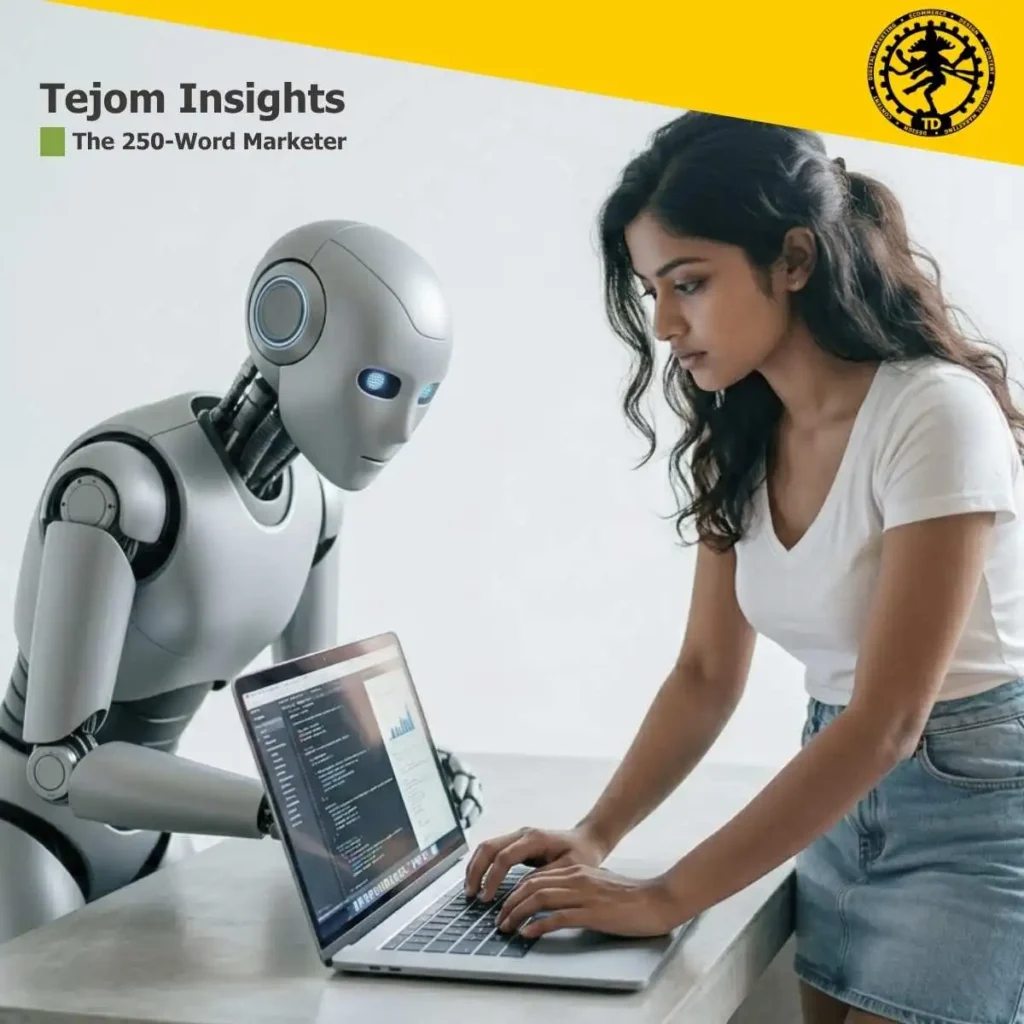
AI SEO vs Traditional SEO: Win the 2026 Answer Engine War

The corporate search playbook just underwent a massive cosmopolitan glow-up, babe. In 2026, simply ranking at the top of Google’s classic blue links is no longer the ultimate flex for high-growth brands. As modern enterprise leaders steer their digital ships through an era dominated by ChatGPT, Gemini, and zero-click AI Overviews, the organic paradigm has fractured into a dual-front war. Welcome to the definitive ready reckoner designed to keep your brand hyper-visible, highly cited, and effortlessly relevant.

tejom-insights/the-250-words-marketer/ai-seo-vs-traditional-seo-2026-guide

Shifting from Clicks to Citations

Honey, let’s be real: legacy search playbooks are officially giving “yesterday’s news.” The core battleground of modern marketing is the structural showdown of AI SEO vs Traditional SEO. While the classic approach meticulously optimized individual web pages for specific keyword positions and click-through rates, the new-age generative engine framework aims for something far more sophisticated: becoming the definitive source that LLMs extract, synthesize, and cite.

Traditional optimization methods ensured search engine bots could index your text. However, today’s answer engine optimization determines whether your brand’s perspective is trusted enough to be spoken aloud by digital assistants. We aren’t just building crawlable sites anymore; we are engineering undeniable truth sets for corporate algorithms.

Decoding the Core Differences

Mechanical Architecture vs Semantic Fluidity

  • The Legacy Vibe: Classical methods rely on rigid keyword strings, linear internal linking structures, and a heavy dependence on backlink counts to signal domain authority.
  • The GenAI Edge: Modern algorithmic frameworks leverage Natural Language Processing (NLP) and contextual data schema to assess thematic completeness and topical authority.

Traffic Clicks vs Zero-Click AI Overviews

  • Traditional Metrics: Success looks like standard organic impressions, high click volume, and straightforward GA4 user tracking.
  • AI Search Optimization Metrics: Success translates to LLM share-of-model, citation frequency, and high-converting referral traffic from conversational platforms.

Winning the EEAT and AI Overview Game

If you want your corporate insights to grace the coveted real estate of an AI Overview, your content cannot just look good—it has to be clinically impeccable. Search engines pull their generative responses directly from premium, trusted web assets. This means a flawless technical foundation coupled with rock-solid Experience, Expertise, Authoritativeness, and Trustworthiness (E-E-A-T) remains your VIP ticket to the party.

To turn your enterprise assets into extractable gold, your content structure needs a serious upgrade. Use clear question-and-answer pairings, format data with crisp bullets, and link your author credentials to verified, real-world industry work. Remember, smart bots ignore fluff but absolutely live for beautifully structured, expert-led data chunks.

The Ultimate 2026 Synergy Strategy

Let’s bust a popular industry myth: optimization isn’t an either-or decision. Winning in 2026 requires a gorgeous, strategic marriage of both worlds. Use classic infrastructure to maintain your baseline visibility, then layer sophisticated conversational intent mapping right on top. By doing so, you ensure your business dominates both traditional SERP placements and fluid generative answers, keeping your brand exceptionally chic and undeniably ahead of the curve.

Let’s build an undeniable search presence together.

If your content strategy isn’t actively optimized for both traditional SERPs and conversational answer engines, you’re leaving elite revenue on the table. Let my team at Tejom Digital handle the heavy algorithmic lifting while you take the credit for the growth.

A 15-minute session?

Take the first step toward future-proof growth:

  • For a Direct Business Query: Call us at  99034 72194

  • For a Quick Consultation: WhatsApp our team at 79807 31010

FAQs

Q1. What is the fundamental difference when analyzing AI SEO vs Traditional SEO?

Traditional methods prioritize page rankings and click volume, whereas modern optimization focuses on securing conversational citations, inclusion in AI Overviews, and high semantic relevance within LLM synthesis engines.

Q2. Is traditional SEO completely obsolete in 2026?

Absolutely not, darling. Traditional systems provide the essential technical groundwork, indexing capabilities, and domain authority that generative answer models rely on to discover and verify your brand’s web content.

Q3. How do AI Overviews impact corporate website traffic?

They shift the paradigm toward high-intent interactions. While overall zero-click scenarios drop generic informational clicks, visitors arriving via generative recommendations exhibit up to 4x higher conversion rates.

Q4. What exactly is Answer Engine Optimization (AEO)?

AEO is the strategic practice of organizing digital content into highly extractable, structured formats so conversational systems like ChatGPT and Gemini can seamlessly quote your insights.

Q5. How can my brand build robust topical authority?

Move away from single-keyword tracking. Instead, design comprehensive content clusters that thoroughly answer every auxiliary question, context, and long-tail query within your corporate niche.

Q6. Why are structured data and schema markup critical now?

Schema serves as a direct translator for machine learning models. It categorizes your data clearly, making it instantly readable and verifiable for advanced synthesis engines.

Q7. How do EEAT guidelines influence generative engine results?

LLMs prioritize low-risk, highly credible information. Verifiable author credentials, original data studies, and transparent brand history prevent your content from being filtered out as unreliable.

Q8. Can we use automated workflows for modern optimization?

Yes, love. Smart marketing teams actively use automation for predictive keyword research, programmatic technical diagnostics, and mapping complex search intent variants at enterprise scale.

Q9. What metrics should corporate marketers track today?

Look beyond basic SERP positions. Monitor your brand’s share-of-model, track specific AI citation frequencies, and measure assisted conversions derived from conversational platforms.

Q10. What is the ideal budget split for search strategies this year?

Forward-thinking enterprises typically allocate roughly 70% of their resources to maintaining strong foundational visibility, while dedicating 30% to advanced generative engine optimization.
#TejomDigital #AISEO #TraditionalSEO #TejomInsights #The250WordsMarketer #EEAT #AIOverviews #DigitalMarketing2026 #SEOStrategy #CorporateMarketing #WomenInTech