Tejom Digital Awarded top 10 Advertising Startup for 2022 by Silicon India - Start Up City
Tejom-Digital-Digital-Marketing-Agency- is an registered MSME

आ नो भद्राः क्रतवो यन्तु विश्वतः

Let noble thoughts come from all directions

ChatGPT Image Generation Ads: What Marketers Should Know

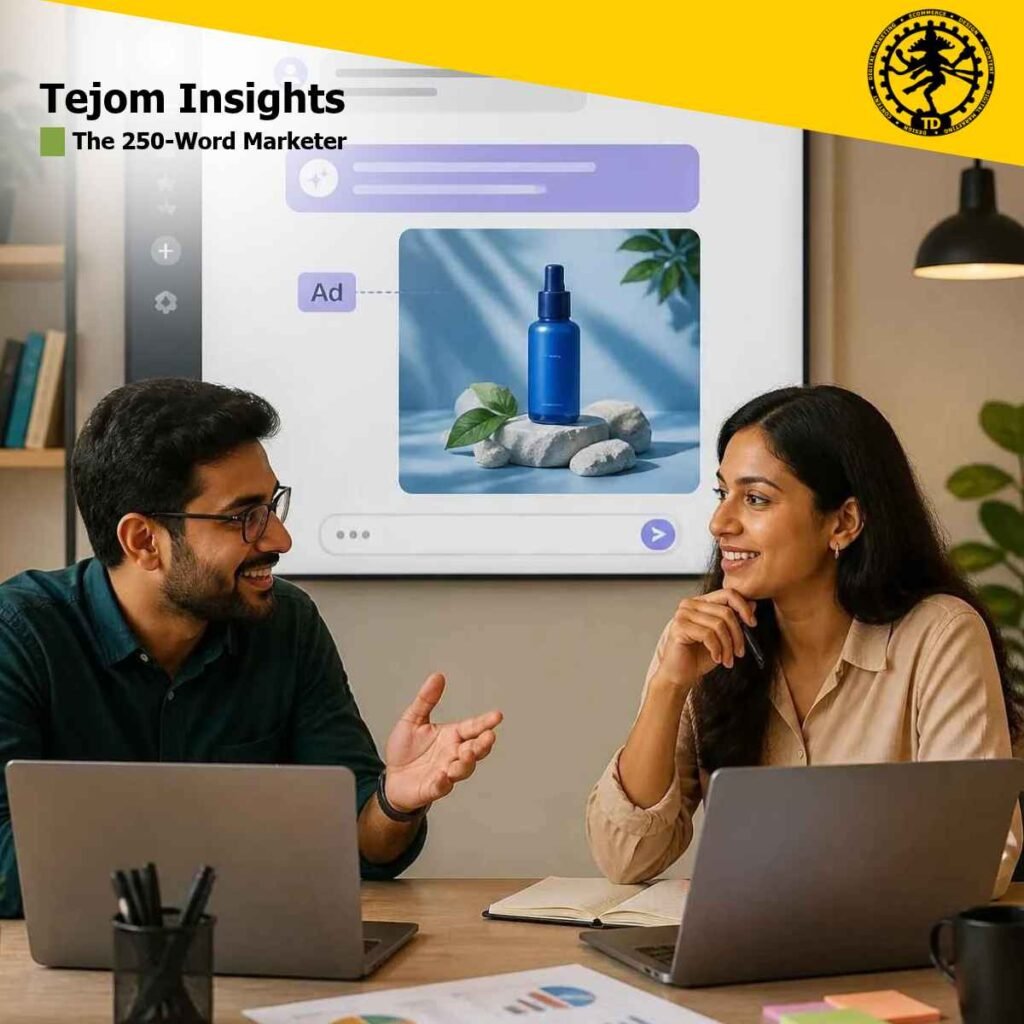
On October 5, 2026, OpenAI announced a new advertising format inside ChatGPT: labeled display ads that appear next to the images people generate. The test starts with a small group of US advertisers later in October 2026. It is not available in India yet — but it is worth understanding now, because it previews where AI chat advertising is heading next.

This article is written for Indian marketing decision-makers who want an early, accurate picture — not hype, and not a prediction dressed up as a launch date.

What OpenAI Actually Announced

The core mechanics, as reported directly from OpenAI’s announcement:

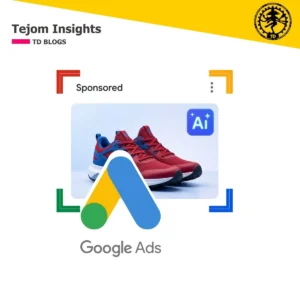
  • Where the ad appears: Next to the image ChatGPT generates for a user — not inside the generated image itself.
  • Labeling: OpenAI says the ads are clearly labeled, and states they will not influence the answers or images ChatGPT produces.
  • Who sees them first: An initial, limited group of US advertisers, starting later in October 2026.
  • What they promote: Products and services suited to visual, inspiration-based presentation — the kind of category that benefits from showing, not just describing.
  • Monetization purpose: OpenAI frames this as supporting ChatGPT’s free and low-cost subscription tiers, which may also nudge some users toward paid plans to avoid ads.

Why AI Chat Platforms Are Moving Into Advertising Now

This fits a pattern this project has tracked for months: AI-powered search and chat surfaces are steadily becoming places people research and decide, not just places they ask questions. TechCrunch’s report on this announcement cites ChatGPT’s reach as 1.2 billion weekly users globally — a scale that makes any new monetization surface commercially significant, even in early testing. Google has followed a similar path with AI Mode and AI Overviews inside Search, introducing its own ad formats as those surfaces matured from pure answers into shopping and research tools. OpenAI’s image-generation ads follow the same logic: a feature people already use heavily (image generation) becomes the first place a new ad unit is tested, because it already has the user attention and visual context an ad benefits from. For marketers, the practical lesson is less about this one format and more about the direction: budget conversations about “search” are increasingly going to need a line for AI chat surfaces too, even while the specific products are still taking shape.

The Measurement Infrastructure Is Already Extensive

What stands out is how much measurement plumbing OpenAI lined up before this even left testing:

  • Click attribution partners: AppsFlyer, Triple Whale, Adjust, DV Rockerbox, Northbeam, Branch, Singular, Kochava, Airbridge, and Tenjin.
  • Full-funnel measurement: Fospha, Measured, and INCRMNTAL.
  • Geo-based incrementality experiments: Haus and WorkMagic (alongside Measured).
  • Brand-suitability pilots in development: DoubleVerify and Integral Ad Science.

This is a longer, more enterprise-grade measurement partner list than most new ad formats launch with. It signals OpenAI is building for advertisers who already run disciplined attribution on other platforms — not just testing a novelty placement.

Why This Isn't the Same Story as "ChatGPT Ads in India"

It’s worth being precise here, because two different ChatGPT advertising stories can easily blur together:

  • General ChatGPT advertising expanded to India in August 2026 — already covered in this project’s October 10, 2026 article on ChatGPT Ads in India.
  • This image-generation ad format is a specific, newer placement type, tested only in the US as of this announcement, with no confirmed India date.

If your team already advertises on ChatGPT’s general ad product in India, this is a heads-up about a new format upstream — not something to try to book yet.

What Is Still Unknown

In the interest of accuracy, here is what OpenAI has not yet confirmed:

  • No pricing details have been published for this ad format.
  • No India or broader-international date has been given. TechCrunch’s reporting says international expansion “will follow eventually,” without a timeline.
  • No named advertisers in the initial test group have been disclosed.
  • No detailed targeting mechanics have been shared beyond the category fit (visual, inspiration-led products).

Any claim beyond these confirmed points would be speculation, and this article avoids presenting speculation as fact.

What Indian Marketers Should Actually Do Right Now

Given the format is US-only, the realistic, useful actions are:

  1. Note it, don’t plan around it. There is nothing to book for an India campaign today.
  2. Watch for the India general-availability pattern to repeat. ChatGPT’s main ad product launched in the US in February 2026 and reached India in late August 2026 — roughly six months later. A similar lag for this image-generation format would put a plausible — not confirmed — India window into the first half of 2027, and that should be read as an informed projection, not a date to plan budgets around.
  3. If you already run ChatGPT ads in India, track OpenAI’s own announcements directly rather than secondary coverage, since measurement-partner integrations (several already used by Indian performance marketers, like AppsFlyer and Adjust) suggest this format may be built to slot into existing stacks once it does expand.

Treat this as a signal for 2027 channel planning, not a reason to delay decisions on channels that are actually available to you today, like Google Ads, Meta, and — as this project covered in a separate October 2026 piece — Snapchat.

Key Takeaways

  • OpenAI confirmed on October 5, 2026 that ChatGPT will test labeled display ads next to generated images, starting with a small US advertiser group later in October 2026.
  • This is a different product from the general ChatGPT ad rollout, which reached India in August 2026.
  • ChatGPT’s reported 1.2 billion weekly global users is part of why a new monetization surface here is commercially significant, even at the testing stage.
  • OpenAI has lined up an unusually long list of attribution and measurement partners for this early-stage test.
  • No pricing, India timeline, or named advertisers have been confirmed.
  • Indian marketers should track this as a 2027 planning signal, not something to act on today.

Stay Ahead of the AI Search & Chat Shift

Don’t get caught off guard when new AI ad channels launch in India. Subscribe to our newsletter to receive clear, fluff-free strategy breakdowns and channel updates delivered straight to your inbox.

A 15-minute session?

Take the first step toward future-proof growth:

  • For a Direct Business Query: Call us at  99034 72194

  • For a Quick Consultation: WhatsApp our team at 79807 31010

FAQs

  1. What are ChatGPT image generation ads?
    A new ad format where OpenAI shows a labeled display ad next to the image ChatGPT generates for a user, rather than inside the image itself.
  2. When did OpenAI announce this?
    OpenAI announced it on October 5, 2026, with the test beginning for a small group of US advertisers later that month.
  3. Are ChatGPT image generation ads available in India?
    Not yet. The test is limited to the United States, and OpenAI has not given an India launch date for this specific format.
  4. Is this the same as the general ChatGPT ads that launched in India?
    No. General ChatGPT advertising expanded to India in August 2026. This image-generation ad format is a separate, newer placement currently US-only.
  5. Will the ads affect what ChatGPT generates or answers?
    OpenAI states the ads will not influence ChatGPT’s answers or the generated image itself — they appear alongside it, not inside it.
  6. What kind of businesses are these ads meant for?
    OpenAI describes them as suited to products and services that benefit from visual, inspiration-based presentation — categories like fashion, home, travel, and lifestyle are the most natural fit based on the stated use case.
  7. How will advertisers measure results from these ads?
    OpenAI has already lined up a long list of attribution partners (including AppsFlyer, Adjust, and Branch) and full-funnel measurement partners (including Measured and INCRMNTAL), suggesting standard performance-marketing measurement will be supported from early on.
  8. Is there a cost or pricing model published yet?
    No. OpenAI has not disclosed pricing for this ad format as of this writing.
  9. Why does ChatGPT need ads at all?
    OpenAI has said advertising helps support its free and lower-cost subscription tiers, and may also give some users an incentive to upgrade to an ad-free paid plan. TechCrunch’s reporting also notes ChatGPT’s scale — 1.2 billion weekly users globally — as context for why advertising is commercially attractive to build out.
  10. When might this reach Indian advertisers?
    There is no confirmed date. ChatGPT’s general ad product launched in the US in February 2026 and reached India about six months later, in late August 2026. If this image-generation format follows a similar gap, early-to-mid 2027 is a reasonable guess — but this is an informed projection, not an announced timeline.
  11. Should Indian businesses change their 2026 festive-season ad plans because of this announcement?
    No. This format is not available in India and has no confirmed timeline, so it should not affect any current festive-season budget decisions.
  12. How is this different from AI Overviews or AI Mode advertising in Google Search?
    They are separate platforms and separate ad products entirely — this is specific to OpenAI’s ChatGPT image-generation feature, while AI Mode and AI Overviews are Google Search surfaces with their own, separately announced ad formats, following a similar pattern of mature AI features eventually introducing advertising.

#ChatGPTAds #OpenAI #AIAdvertising #GenerativeAI #AISearch #DigitalMarketing #MarTech #FutureOfAdvertising #TejomDigital #AIMarketing

Google AI Mode More Links 2026: What It Means for SEO

Google just announced five changes to show more, and more prominent, links inside AI Mode and AI Overviews. This Google AI Mode more links 2026 update includes a tested “official site” section and 7x growth in Preferred Sources use. Here’s what changed, what’s still unconfirmed, and what it means for your content strategy.

Read More »

Shopify AI Shopping Channels: What’s Auto-Enabled in Your Store

Shopify’s AI shopping channels — Meta’s Muse, Google’s AI Mode, Microsoft Copilot, and ChatGPT — are switched on by default for eligible stores, not opt-in. Here’s exactly what’s shared, what direct checkout means for your analytics, and what to audit before your festive sales traffic arrives.

Read More »

Google Ads Customer Retention Goals: What’s New in 2026

Google Ads customer retention goals have moved from beta to wide availability this month, with new Shopping support and a percentage-based value multiplier. Here’s what actually changed, what Google hasn’t confirmed yet, and how to use it to hold onto the festive-season buyers you’re about to acquire.

Read More »

AI Search Query Growth 2026: What It Means for Content Strategy

Google’s Q3 2026 earnings call revealed that year-over-year search query growth is the highest it has been in five years, fuelled by AI Mode and more conversational, multimodal searching. Here’s what this ai search query growth means for how Indian businesses should plan content and SEO for the months ahead.

Read More »

Cheap Agencies, Costly Mistakes: How Unlicensed Content Can Tank Your Brand

In an era where digital content moves at breakneck speed, cutting corners with budget agencies or unvetted freelancers can invite catastrophic legal liability. This ready reckoner breaks down how unlicensed stock photos, stolen vectors, and unverified media assets can result in hefty copyright penalties under Section 63 of the Indian Copyright Act, forced rebrands, and lasting reputational fallout.

Read More »