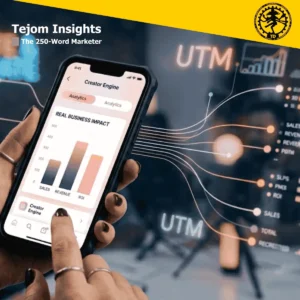
Faceless Brands Are Invisible: The Founder-Led Social Strategy
Brand accounts are seeing a 30% reach drop. It’s time for a Founder-Led Social Strategy. Learn how to humanize your brand and skyrocket engagement.
In the rapid-fire digital landscape of 2026, the volume of content is no longer a competitive advantage—quality is. As search engines become more sophisticated at identifying AI-generated patterns, the most successful SEO content frameworks 2026 rely on a “Hybrid Workflow.” This approach uses Large Language Models to handle the heavy lifting of research and initial drafting while keeping human expertise at the center to satisfy Google’s E-E-A-T (Experience, Expertise, Authoritativeness, and Trustworthiness) requirements. To rank today, your brand must bridge the gap between AI efficiency and human nuance. This guide outlines how to implement a high-speed, high-integrity content pipeline.
Start by feeding your primary entity and keyword cluster into an LLM. Use a prompt like: “Create a detailed blog outline for [Topic] that addresses these 5 user pain points.” This ensures your structure is logically sound and hits all the technical SEO marks before a single word of prose is written.
Goal:
Bake intent and structure into the article before you write a single sentence.
Use a prompt like:
“Create a detailed blog outline for [topic] that addresses these 5 user pain points: [list them]. Structure it with H2s, H3s, and 1–2 bullet points under each section explaining what should be covered. Optimize for search intent and readability.”
Why it works:
A strong outline surfaces missing sub‑topics and natural LSI phrases, so your article already “feels” comprehensive before drafting.
It also aligns the content with how search engines organize topics (entities → clusters → sub‑themes), which helps both humans and AI rankings.
Let the LLM generate a rough draft based on your outline. Focus on speed here. The goal is to get 80% of the information onto the page. Ensure you use a prompt that specifies a professional, conversational tone to minimize the “robotic” feel of early AI models.
Goal:
Fill in the blanks quickly, not perfectly.
Prompt:
“Using the outline above, generate a first‑draft article for [topic] in 800–1,200 words. Write in a professional, conversational tone, as if you were a digital‑marketing‑savvy expert explaining the topic to a small‑business owner. Avoid overly technical jargon unless briefly explained.”
Key points:
Treat this as a “content scaffold”: you’re after broad coverage, not final polish.
This step surfaces traps (repetition, weak arguments, missing transitions) that you’ll catch later in the human‑editing phase.
This is where the human takes over. Replace generic AI examples with real-world case studies, personal anecdotes, or brand-specific data. If you are writing for a client like CC Saha Ltd, include specific insights about hearing health that only a specialist would know.
Goal:
Turn generic AI text into your brand’s authority.
Actions for you as the human editor:
Replace generic case‑study placeholders with real examples (e.g., “CC Saha Ltd increased hearing‑aid‑awareness YOY by X% via targeted reels and local‑clinic partnerships”).
Add industry‑specific nuances (e.g., how hearing‑health messaging differs across rural vs. urban Eastern India, or how age‑specific copy performs on Instagram vs. Facebook).
Weave in brand voice cues: your bilingual style, local festival angles, or campaign‑measurement tricks you’ve used before.
This step is where you build E‑E‑A‑T: real expertise, first‑hand experience, and brand‑specific authority that AI can’t fake.
LLMs can still hallucinate data. A human editor must verify every statistic, date, and technical claim. Add links to high-authority external sources (like government bodies or research papers) to boost the ‘Trustworthiness’ signal of the article.
Goal:
Kill hallucinations and add trust signals.
What to do:
Cross‑check every statistic, date, product name, or medical claim against authoritative sources (NIH, ICMR, WHO, reputable journals, or government healthcare portals for India).
Where possible, link explicitly to those high‑authority pages (e.g., “As per the World Health Organization’s 2023 report on hearing loss…” → link).
For clients like CC Saha Ltd, include client‑approved data (e.g., “In CC Saha Ltd’s 2025 Bengal‑wide campaign, X% of users booked a free hearing‑test after viewing the video”).
This step is critical for trustworthiness in AI‑first search and for protecting your brand (and your client) from reputational risk.
The final polish involves adjusting the rhythm of the sentences. Use an LLM to “check for clarity,” but rely on a human to ensure the brand’s unique wit and personality are present. This prevents your content from sounding like every other AI-generated piece on the web.
Goal:
Make it sound human, branded, and distinctive.
How to execute it:
First, ask the LLM to edit for clarity and simplicity:
“Rewrite this article to improve clarity, shorten long sentences, and remove jargon. Keep it at a 7–9th grade reading level.”
Then, as the human editor, do the fine‑tuning:
Adjust sentence rhythm so it matches your natural speech patterns (e.g., your Bengali‑English cadence).
Add brand wit: light metaphors, analogies, or cultural references that reflect your style (e.g., festival‑themed campaigns, cricket‑style “match‑day” campaign language).
Ensure key CTAs sound like you, not a generic template (e.g., “Want to bring this kind of impact to your clinic’s digital presence?” instead of “Contact us today”).
This final pass keeps your content distinctive in a sea of AI‑generated text, while still being optimized for SEO and AI‑assisted search.
The Hybrid Workflow is the only way to scale content without risking your brand’s reputation or search ranking. By automating the mundane and humanizing the critical, you create a sustainable SEO content framework 2026 that search engines love and humans actually read. Efficiency gets you on the page, but E-E-A-T keeps you at the top.
Q1. What does E-E-A-T stand for in 2026?
It stands for Experience, Expertise, Authoritativeness, and Trustworthiness—the four pillars Google uses to evaluate content quality.
Q2. Can I use AI to write the entire blog?
You can, but it is risky. Without human verification and personal experience, the content lacks the “Experience” element that search engines now prioritize.
Q3. How does this workflow save time?
It reduces the time spent on the “blank page” phase and research by up to 70%, allowing writers to focus entirely on high-value editing and storytelling.
Q4. Does Google penalize AI content?
Google penalizes low-quality content. If your AI content is helpful, accurate, and original, it will rank; if it’s generic and unverified, it won’t.
Q5. How do I prove ‘Experience’ to an LLM search engine?
Use first-person narratives, original photos, or specific data points that aren’t available in common training sets.
#ContentDevelopment #LLMSEO #DigitalMarketing2026 #SEOStrategy #ContentMarketing #TejomDigital #SEO2026 #ContentMarketing #EEAT #AIWriting #TejomInsights

Brand accounts are seeing a 30% reach drop. It’s time for a Founder-Led Social Strategy. Learn how to humanize your brand and skyrocket engagement.

If you can’t track it, don’t scale it. This guide breaks down the UTM tracking and engagement mapping strategies used by top brands to ensure influencer ROI in 2026.
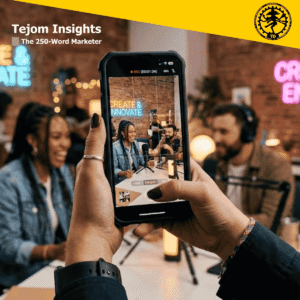
Traditional agencies are failing. Learn how to transform your brand into a Creator Engine with a future-proof 2026 social strategy focused on authenticity.
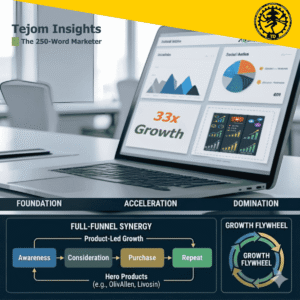
Search engines in 2026 value engagement over everything. This guide explains how to implement conversational UX SEO 2026 by using LLM-powered bots to provide instant answers, increasing site stickiness and proving your authority to AI search crawlers.

Search engines in 2026 value engagement over everything. This guide explains how to implement conversational UX SEO 2026 by using LLM-powered bots to provide instant answers, increasing site stickiness and proving your authority to AI search crawlers.
Search engines in 2026 value engagement over everything. This guide explains how to implement conversational UX SEO 2026 by using LLM-powered bots to provide instant answers, increasing site stickiness and proving your authority to AI search crawlers.
In 2026, the secret to ranking isn’t just using AI—it’s how you supervise it. This guide breaks down the essential SEO content frameworks 2026, showing you how to integrate LLM drafts with human-led E-E-A-T verification to create high-ranking, high-trust content that survives any algorithm update.

Regional markets are the new goldmines. This guide breaks down the regional influencer marketing strategy you need to dominate Kolkata, Odisha, and the North East.
This blog covers Planning, Budgeting, and Measuring Influencer Campaigns to help brands boost 2025 ROI.
Trustea sustainability code for Indian tea: real impact, branding, and digital change in India’s tea sector.
Tribal Branding Catalyst builds loyal communities that drive startup growth and supercharge the flywheel marketing model.
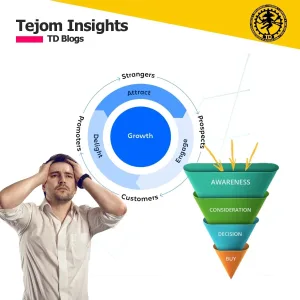
Actionable insights on digital marketing funnel vs flywheel model to optimize growth and retention.
Struggling to rank your blog? Learn 11 actionable SEO strategies to improve local search results for blogs and get found by the right audience.

Learn how to harness Google Ads for e-commerce in India with expert strategies that boost traffic and conversions.
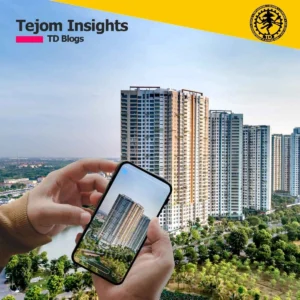
Proven strategy on how to build online presence for a real estate company through websites, listings, social media, advertising, and influencer campaigns.
Google Ads Management Hacks can boost your ROI in no time. Discover actionable, quick-win strategies you can use today with Google Ads management hacks.