1. When is Diwali in 2026?
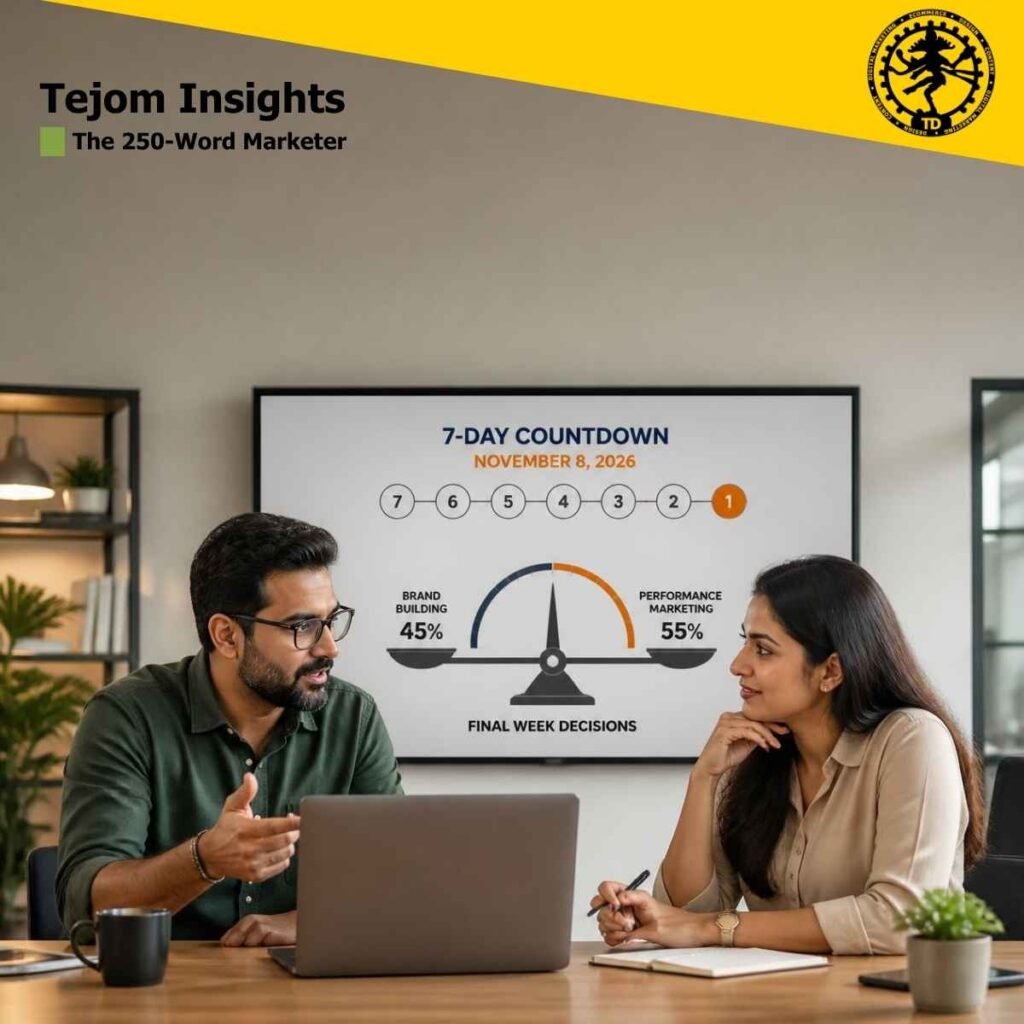
Diwali 2026, including Lakshmi Puja, falls on Sunday, November 8, 2026.
2. Is festive spending actually going down this year in India?
According to LocalCircles’ October 16, 2026 survey of over 67,000 urban households, projected urban festive spending is down 6% year-over-year to ₹1.97 lakh crore, though still above 2024 levels. This is a survey-based projection of intent, not a confirmed measurement of actual sales.
3. Why is festive spending projected to fall this year?
The survey attributes the projected dip to rising inflation (CPI at 5.54% in September 2026) and higher borrowing costs following the RBI’s October 7, 2026 repo rate hike to 5.50%, in contrast to 2025, when GST 2.0 rate cuts coincided with and likely boosted festive spending.
4. Should I cut my Diwali ad budget because of this survey?
Not necessarily. The survey shows strong buying intent in specific categories like clothing, footwear, and gifting (72% and 39% respectively), even as the aggregate projection is down. A category-aware reallocation is more defensible than an across-the-board cut.
5. Which product categories show the strongest festive buying intent for 2026?
Per the LocalCircles survey, clothing, footwear, and accessories lead at 72% of households planning purchases, followed by home appliances/furniture and travel/holidays at 45% each, and gourmet food/gifting at 39%.
6. Which categories show the weakest festive buying intent?
Jewellery is the weakest at just 6% of households planning purchases, with mobile phones, electronics, and gadgets at a more moderate 22%.
7. How does the RBI’s rate hike affect Diwali marketing specifically?
Higher interest rates generally raise borrowing costs for big-ticket, EMI-funded purchases like appliances, electronics, and jewellery. This makes savings-conscious and flexible-payment messaging (no-cost EMI, cashback) potentially more effective than pure discount messaging this year, especially for higher-ticket categories.
8. How reliable is a single consumer survey for budget decisions?
It should be treated as one credible, well-documented data point — not a guarantee. LocalCircles surveyed over 67,000 households across 307 districts, which is a substantial sample, but it measures stated intent before the season, not actual completed purchases.
9. What should I do in the final week before Diwali if my budget is already locked?
Within a locked budget, you can still shift creative emphasis and targeting toward stronger-intent categories, adjust bidding and pacing day by day based on real performance signals, and prepare savings-conscious ad copy variants to test against standard discount messaging.
10. Does this data apply equally to Kolkata, Bengaluru, Delhi NCR, and Chandigarh?
The LocalCircles survey and RBI data are national, not city-specific, so this article does not claim city-level variation that isn’t backed by evidence. Brands in these markets should still apply the same category-level logic using their own regional sales data.
11. Is this the same GST 2.0 reform that’s being discussed in the data?
Yes — GST 2.0 rate cuts took effect in September 2025 and are cited as a factor that boosted 2025 festive spending. No comparable new GST change has been confirmed for the 2026 festive season; the GST 2.0 rates from 2025 are simply the baseline this year’s data is compared against.
12. What should I plan for immediately after Diwali, given this softer forecast?
If overall discretionary spending is genuinely more cautious this year, retaining and re-engaging festive buyers afterward becomes more valuable, since acquiring new customers may be costlier in a more price-sensitive environment. Decide your retention approach and messaging before Diwali week ends, not after.