


Tejom Digital Awarded top 10 Advertising Startup for 2022 by Silicon India - Start Up City
Tejom-Digital-Digital-Marketing-Agency- is an registered MSME

आ नो भद्राः क्रतवो यन्तु विश्वतः

Let noble thoughts come from all directions

Google Ads AI Max Migration Guide: What to Do Before It Auto-Upgrades

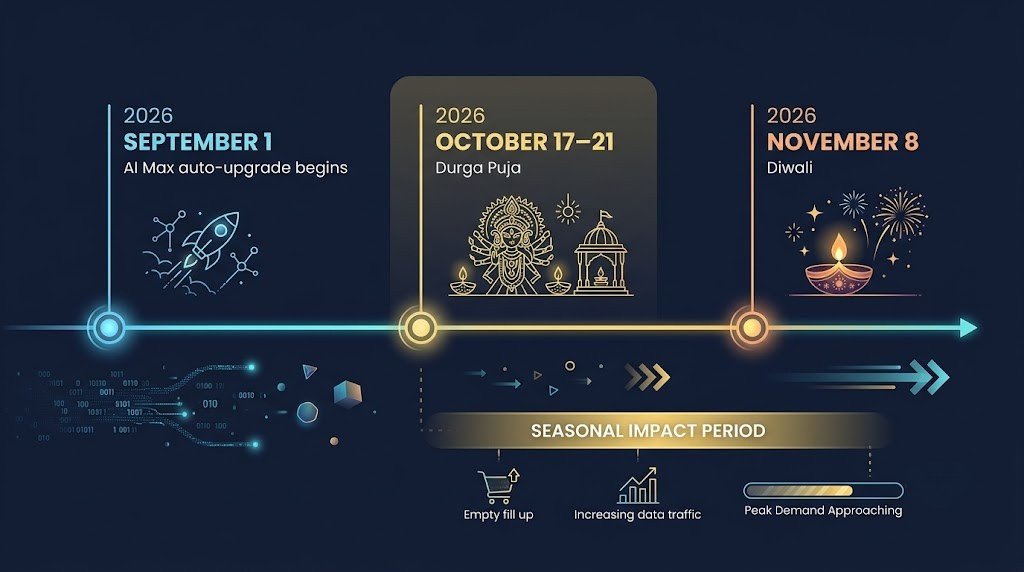
If you manage Google Ads, or someone on your team does, this affects you directly. Since September 1, 2026, Google has been automatically upgrading eligible Search campaigns to AI Max — a more automated version of Search campaigns that changes how your ads are matched to search queries and how your ad text is generated.

Many business owners will not notice the upgrade happened. That is the problem. AI Max changes real levers in your account: keyword matching, headline and description generation, and where your budget gets spent. If you don’t actively check your account, you are letting an algorithm make decisions that used to be yours.

This guide explains what AI Max actually is, what changed, and exactly what to check in your account this week — especially with festive-season budgets (Durga Puja and Diwali) about to be finalized.

What Is AI Max for Search Campaigns?

AI Max is Google’s more automated evolution of standard Search campaigns. Based on Google’s own 2026 product updates, it brings together several AI-driven capabilities that used to be separate settings:

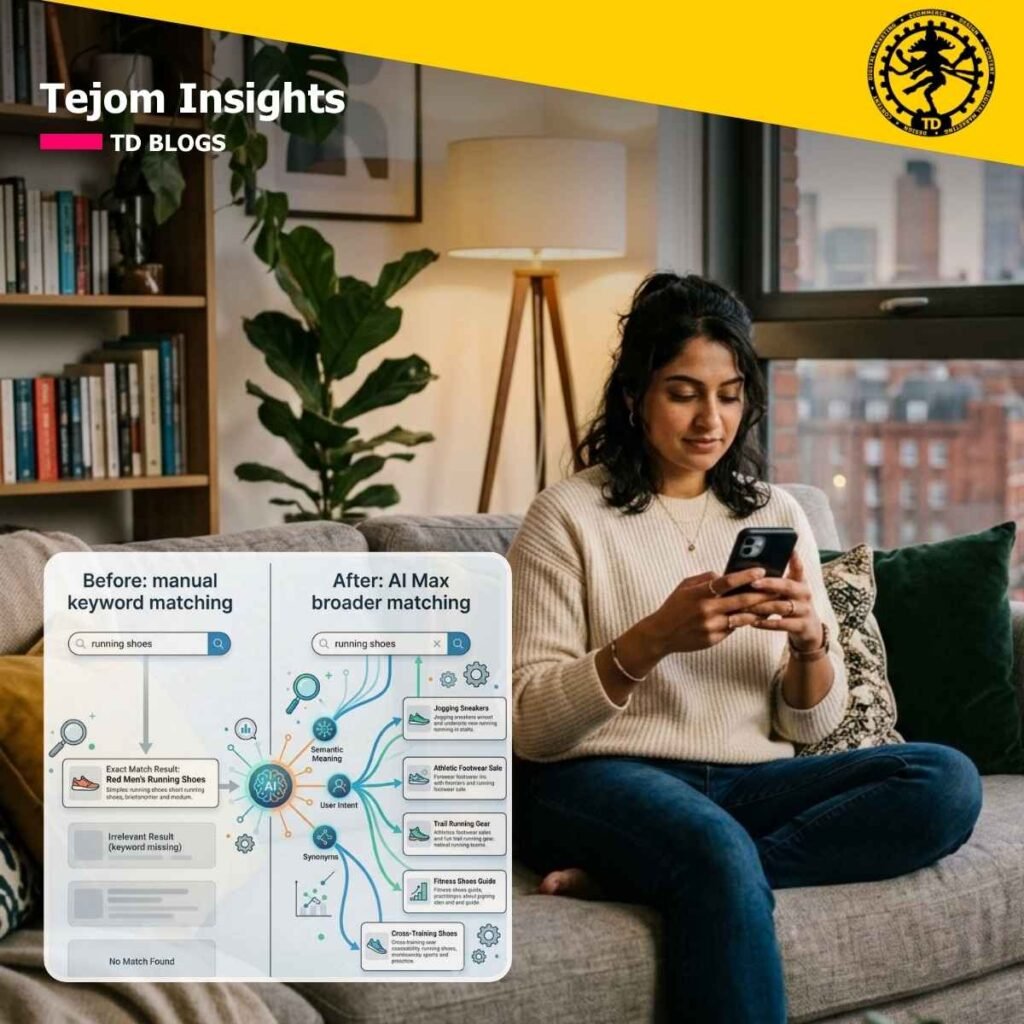
  • Broader, AI-driven search-term matching — your ads can now match a wider range of related searches than traditional keyword matching allowed, with the matching logic itself decided more by Google’s models.
  • AI-generated and AI-customized ad text — headlines and descriptions can be automatically generated or adjusted based on the landing page and the searcher’s query.
  • New testing and planning tools — Google added tools in August 2026 for testing budget and ROI-target scenarios specifically for AI Max, suggesting Google expects advertisers to need help adjusting targets under the new system.

In short: AI Max trades some manual control for broader reach and less hands-on management. That trade-off can work well — or it can quietly waste money — depending on how your account is set up before and after the upgrade.

What Actually Changed on September 1, 2026

  • Based on verified Google Ads product-update reporting:

    1. Automatic upgrades began. Eligible Search campaigns started converting to AI Max, not on request, but as a rollout.
    2. Search-term matching got broader. Your ads may now show for queries that a human wouldn’t have matched to your original keyword list.
    3. Ad text can be generated or altered automatically, which means the exact message a customer sees may no longer be the message you wrote and approved.
    4. New reporting layers appeared, including tracking for AI-generated product titles — a signal that Google itself expects advertisers to need to audit what the AI is doing.

Why This Matters More in October and November 2026

  • Durga Puja (October 17–21, 2026) and Diwali (November 8, 2026) sit right in the middle of this migration window. These weeks typically carry the highest consumer search and purchase intent of the year in India. Running an under-monitored, newly-automated campaign structure into your highest-spend weeks is a real risk — not because automation is bad, but because nobody has reviewed whether the automation is working correctly for your specific business yet.

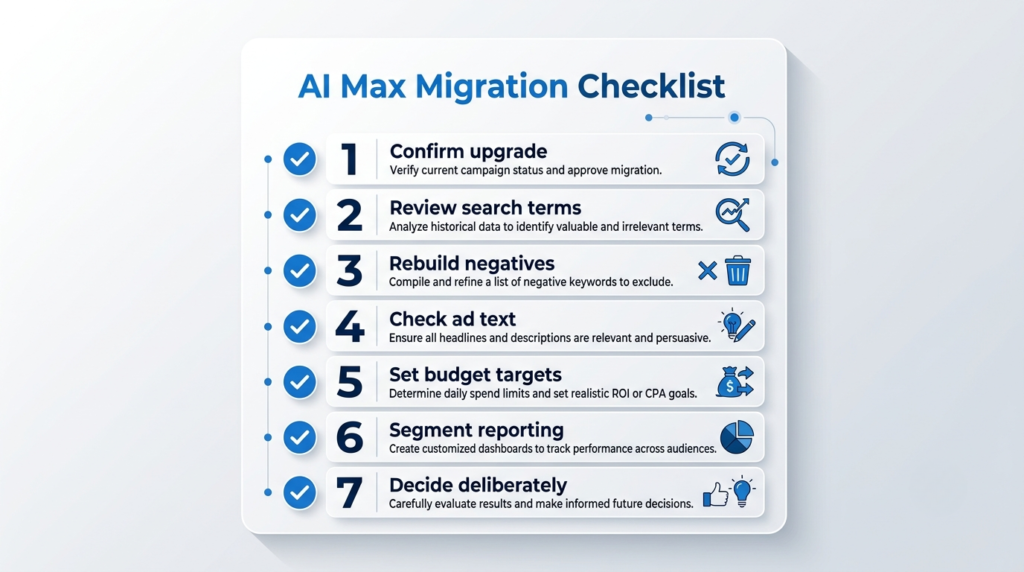
A Practical Checklist: What to Do This Week

  • Confirm whether your account was upgraded. Check your campaign settings. If a Search campaign shows AI Max features enabled that you did not turn on, it was auto-upgraded.
  • Review your search terms report. Compare the queries your ads are now matching against what you’d approve manually. Broader matching can bring in irrelevant traffic if your negative keyword list isn’t strong.
  • Rebuild and expand your negative keyword list. This is the single most important lever you still fully control under AI Max. A weak negative keyword list is the fastest way to waste budget under broader matching.
  • Check your ad text. If headlines or descriptions are being auto-generated, read what’s actually running. Make sure claims are accurate and on-brand — you are still legally and reputationally responsible for what your ads say.
  • Set (and sanity-check) budget and ROI targets using the new planning tools. Google’s August 2026 testing tools let you model budget and ROI-target scenarios before committing. Use them rather than letting the campaign run on default settings into your festive-season spend.
  • Segment reporting by AI-generated vs. your original assets. The new reporting for AI-generated product titles and assets exists precisely so you can tell what’s working. Use it — don’t assume it’s all performing the same.
  • Decide deliberately, not by default. You can adjust settings within AI Max, but you cannot simply “opt out” back to the old, fully manual structure once migrated. Treat this as a real decision point, not something to leave on autopilot.
  •  

Manage It Yourself, or Bring in Help?

  • For a founder running a single, modest campaign, working through this checklist yourself over an afternoon is realistic. For a business with multiple campaigns, a meaningful ad budget, or a festive-season push where every wasted rupee compounds, this is exactly the kind of moment where a marketing team or agency earns its cost — someone needs to actively monitor the search terms report, tune negative keywords, and validate AI-generated creative on an ongoing basis, not just once.

Key Takeaways

  • AI Max auto-upgrades started September 1, 2026 — check whether your account was affected.
  • Broader search-term matching and AI-generated ad text mean less manual control by default.
  • Your negative keyword list is now more important, not less.
  • Durga Puja and Diwali 2026 fall right inside this transition window — validate before, not during, peak spend.
  • This is a decision to actively manage, not a “set and forget” upgrade.

Ready to Lock In Your Festive Strategy Before Rates Spike?

Don’t let competitor ad spend push you out of high-intent search auctions. Talk to our team about your festive campaign today and build a data-driven strategy tailored for Durga Puja and Diwali.

A 15-minute session?

Take the first step toward future-proof growth:

  • For a Direct Business Query: Call us at  99034 72194

  • For a Quick Consultation: WhatsApp our team at 79807 31010

FAQs

  1. What is Google Ads AI Max?
    AI Max is a more automated version of Google Search campaigns that uses AI to broaden search-term matching and to generate or adjust ad headlines and descriptions, reducing some manual controls advertisers previously had.
  2. When did AI Max start auto-upgrading Search campaigns?
    Automatic upgrades for eligible Search campaigns began September 1, 2026, following a migration timeline Google announced in August 2026.
  3. Can I opt out of AI Max after my campaign is upgraded?
    You can adjust settings within AI Max, but Google has not indicated a simple way to revert fully to the previous, non-AI-Max Search campaign structure once migrated. Treat the upgrade as a change to manage, not reverse.
  4. Is AI Max the same as Performance Max?
    No. Performance Max is a separate, broader campaign type that spans multiple Google networks (Search, Display, YouTube, Discover, Gmail, Maps). AI Max is specifically an automation layer within Search campaigns.
  5. Will AI Max increase my ad spend?
    It can, because broader search-term matching may show your ads for more queries. Whether that spend is well spent depends on how well your negative keywords and targets are set — it is not automatically wasteful, but it is not automatically efficient either.
  6. How do I check if my account was already upgraded?
    Review your Search campaign settings for AI Max features and check your search terms report for queries broader than your original keyword list — both are signs the upgrade has taken effect.
  7. What is the biggest risk with AI Max for a small business?
    Running festive-season budgets through a newly-automated, unreviewed campaign structure. The combination of broader matching and high seasonal search volume can amplify wasted spend if negative keywords aren’t strong.
  8. Does AI-generated ad text need to be reviewed?
    Yes. You remain responsible for what your ads claim. Review AI-generated or AI-adjusted headlines and descriptions regularly, not just once after migration.
  9. Should I manage this migration myself or hire an agency?
    That depends on your account’s complexity and budget. A single small campaign is manageable in-house with regular review. Multiple campaigns, larger budgets, or a festive-season push where ongoing monitoring matters are situations where dedicated marketing support is worth the cost.
  10. Where can I read Google’s own information on AI Max and Performance Max updates?
    Google Ads publishes product updates and help documentation on its official Google Ads Help and product update channels; always cross-check specific account behavior against your own campaign settings, since rollout timing can vary by account.

#TejomDigital #TejomInsights #GoogleAds #AIMax #PPC #DigitalMarketing #PerformanceMarketing #SearchAds #MarTech #B2BMarketing #GrowthMarketing #IndiaDigitalMarketing

CTV Programmatic Streaming Ads: The New Era
The 250-Word Marketer
Naina Adhikari

CTV Programmatic Streaming Ads: The New Era

Discover how CTV programmatic streaming ads bridge programmatic precision and big-screen impact. Learn how brand leaders capture silent-scroll audiences using 3-second hooks, kinetic typography, and omnichannel retargeting.

Read More »

Cheap Agencies, Costly Mistakes: How Unlicensed Content Can Tank Your Brand

In an era where digital content moves at breakneck speed, cutting corners with budget agencies or unvetted freelancers can invite catastrophic legal liability. This ready reckoner breaks down how unlicensed stock photos, stolen vectors, and unverified media assets can result in hefty copyright penalties under Section 63 of the Indian Copyright Act, forced rebrands, and lasting reputational fallout.

Read More »