Tejom Digital Awarded top 10 Advertising Startup for 2022 by Silicon India - Start Up City
Tejom-Digital-Digital-Marketing-Agency- is an registered MSME

आ नो भद्राः क्रतवो यन्तु विश्वतः

Let noble thoughts come from all directions

Tier-2 and Tier-3 Markets Driving the Next Wave of Social Commerce

Hey there, ambitious growth leaders! I’m Naina from Tejom Digital, and today on Tejom Insights under The 250-Words Marketer, we are skipping the fluff and tackling the biggest growth story in modern retail. If your brand is still obsessing exclusively over South Bombay or South Delhi, you’re missing the actual party. Buckle up, darling—let’s dissect how non-metro India is rewriting the social shopping playbook and why your 2026 growth chart depends on it.

Tier-2 and Tier-3 Markets Driving the Next Wave of Social Commerce

The Structural Shift: Welcome to the New Engine of Growth

The Numbers Behind the Bharat Boom

Forget what you knew about traditional retail geography. According to recent joint intelligence from BCG and McKinsey, over 60% of India’s e-commerce shipments now originate from non-metro regions, with rural and semi-urban internet users constituting nearly 57% of active digital consumers. The Shift: Over half of India’s digital growth is now fueled by consumers in Tier-2, Tier-3, and rural pockets. These audiences are mobile-first, heavily vernacular, and predominantly discover products through video-first ecosystems rather than traditional text-based search engines.

Smart marketers recognize that Tier-2 and Tier-3 Markets Driving the Next Wave of Social Commerce are not merely scaled-down versions of metros. They represent a distinct, aspirational consumer base with high purchasing power and unique digital habits.

Core Catalysts Powering Non-Metro Commerce

Why is social shopping exploding outside the metros right now?

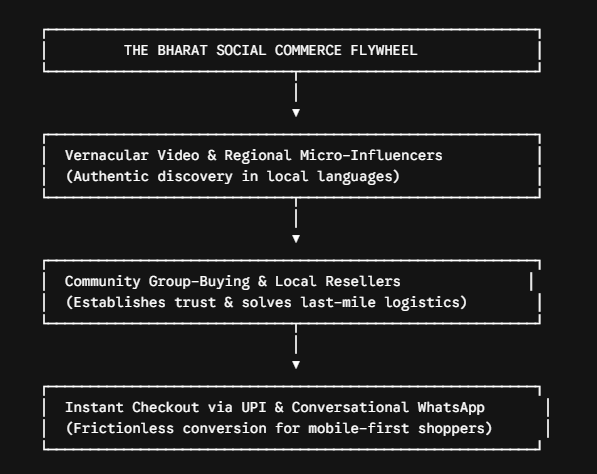
  • Vernacular Video First: Over 90% of non-metro internet users engage primarily via short-form regional video and audio content on Instagram, YouTube Shorts, and Moj. Text search is giving way to visual, contextual product discovery.
  • Community Trust & Local Micro-Entrepreneurs: Models like CityMall prove that community resellers, local group leaders, and micro-influencers bridge the trust gap far more effectively than corporate banner ads.
  • Hyper-Localized D2C Agility: Over 53% of Indian MSMEs now prefer selling through social channels and direct storefronts rather than relying solely on legacy marketplaces.
  • Spike in Discretionary Income: With over 140 million Indian households set to cross higher income brackets by 2030, discretionary spending in beauty, personal care, and fashion is skyrocketing at a 22% CAGR in Tier-2 and Tier-3 towns.
Core Catalysts Powering Non-Metro Commerce

Strategic Blueprint: Capitalizing on Non-Metro Social Shopping

Re-Engineering Discovery for Vernacular Shoppers

If you want to win in Tier-2 and Tier-3 Markets Driving the Next Wave of Social Commerce, you must overhaul your customer journey:

  1. Shift from Search to Video Feeds: Stop relying purely on keyword-heavy Google Search ads. Invest heavily in regional video creators demonstrating product utility in Hindi, Tamil, Telugu, Marathi, and Bhojpuri.
  2. Leverage WhatsApp & Conversational AI: Integrate voice-assisted search and WhatsApp checkout funnels to make buying as effortless as chatting with a neighbor.
  3. Build Community Trust Networks: Empower local micro-influencers and regional brand advocates to drive social validation and peer recommendations.

If your social commerce playbook isn't speaking the local language—literally and culturally—you're leaving revenue on the table, plain and simple.

Let’s fix that. Is your brand ready for the Tier-2 & Tier-3 social commerce wave?

A 15-minute session?

Take the first step toward future-proof growth:

  • For a Direct Business Query: Call us at  99034 72194

  • For a Quick Consultation: WhatsApp our team at 79807 31010

FAQs

Q1. Why are Tier-2 and Tier-3 Markets Driving the Next Wave of Social Commerce in India?

Non-metro markets are driving growth due to deep 5G internet penetration, rising aspirational income, affordable smartphones, and high engagement with vernacular video-first platforms like Instagram, YouTube, and Moj.

Q2. What is the role of vernacular video content in Tier-2 and Tier-3 social commerce?

Vernacular video replaces traditional text search, letting non-metro consumers discover and evaluate products in their native languages through relatable creator reviews and live video demonstrations.

Q3. How does community-led social commerce work in smaller Indian cities?

Community-led models leverage local micro-entrepreneurs and neighborhood WhatsApp leaders who bundle orders, offer social trust, and simplify last-mile distribution for value-conscious buyers.

Q4. What percentage of Indian e-commerce demand originates from non-metro markets?

According to McKinsey and Market Xcel reports, over 60% of e-commerce shipments and order volumes now originate from Tier-2, Tier-3, and rural regions.

Q5. Why do D2C brands perform better on social channels in Tier-2 and Tier-3 cities?

D2C brands utilize direct creator marketing, lower platform overhead, and conversational WhatsApp checkout to build direct trust with regional consumers who seek lifestyle upgrades.

Q6. What product categories lead social commerce sales in non-metro regions?

Beauty and personal care, apparel and fashion, consumer electronics, smartphones, and household daily essentials lead non-metro digital purchases.

Q7. How does quick commerce fit into Tier-2 and Tier-3 market growth?

Quick commerce is expanding beyond metro groceries into non-metro regions, offering 10-to-30 minute deliveries for electronics, personal care, and emergency home goods.

Q8. How do digital payment innovations boost social commerce in Tier-3 towns?

Seamless UPI integration, One-Click Pay, and automated Cash on Delivery (COD) verification reduce checkout friction for first-time or cautious online shoppers.

Q9. How can brands adapt their SEO and discovery strategy for non-metro audiences?

Brands should optimize for Voice Search, regional LSI keywords, vernacular YouTube/Instagram content tags, and visual discovery engines rather than traditional English text keywords.

Q10. What is the forecasted size of India’s e-commerce and social commerce market by 2030?

BCG and McKinsey project India’s total e-commerce ecosystem to reach between $200 billion and $300 billion by 2030, heavily propelled by non-metro adoption.

#TejomDigital #SocialCommerce #BharatRetail #Tier2Tier3Growth #TejomInsights #D2CBrends #VernacularMarketing #DigitalCommerce #NextWaveGrowth #ECommerceIndia #250WordsMarketer

CTV Programmatic Streaming Ads: The New Era
The 250-Word Marketer
Naina Adhikari

CTV Programmatic Streaming Ads: The New Era

Discover how CTV programmatic streaming ads bridge programmatic precision and big-screen impact. Learn how brand leaders capture silent-scroll audiences using 3-second hooks, kinetic typography, and omnichannel retargeting.
Read More »

Cheap Agencies, Costly Mistakes: How Unlicensed Content Can Tank Your Brand

In an era where digital content moves at breakneck speed, cutting corners with budget agencies or unvetted freelancers can invite catastrophic legal liability. This ready reckoner breaks down how unlicensed stock photos, stolen vectors, and unverified media assets can result in hefty copyright penalties under Section 63 of the Indian Copyright Act, forced rebrands, and lasting reputational fallout.

Read More »